

About This Site: Cultural Amnesia
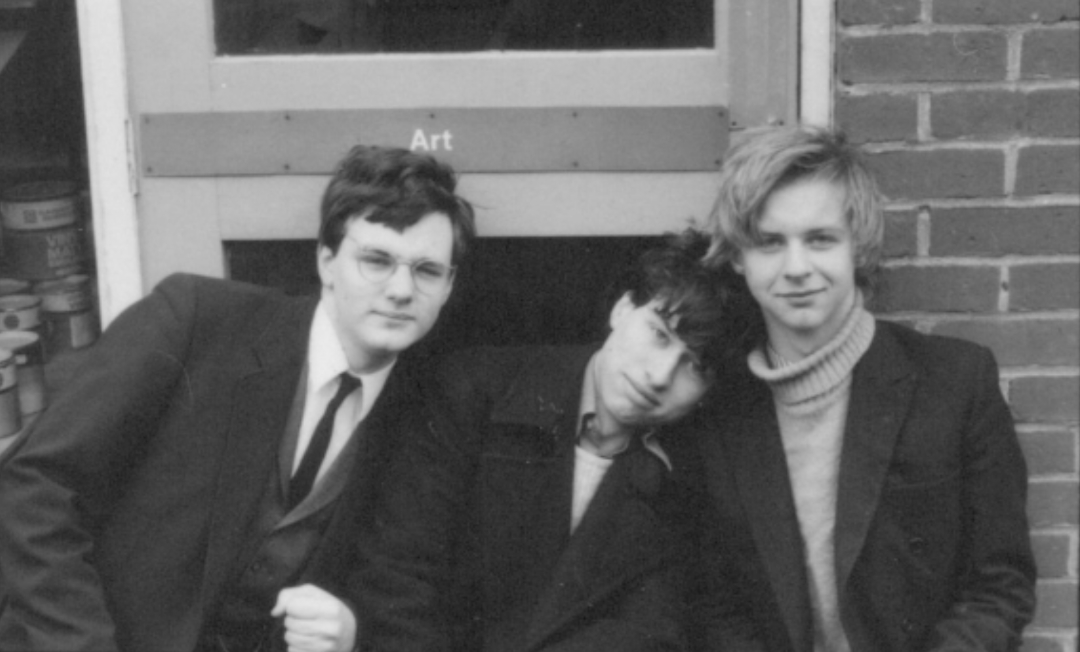
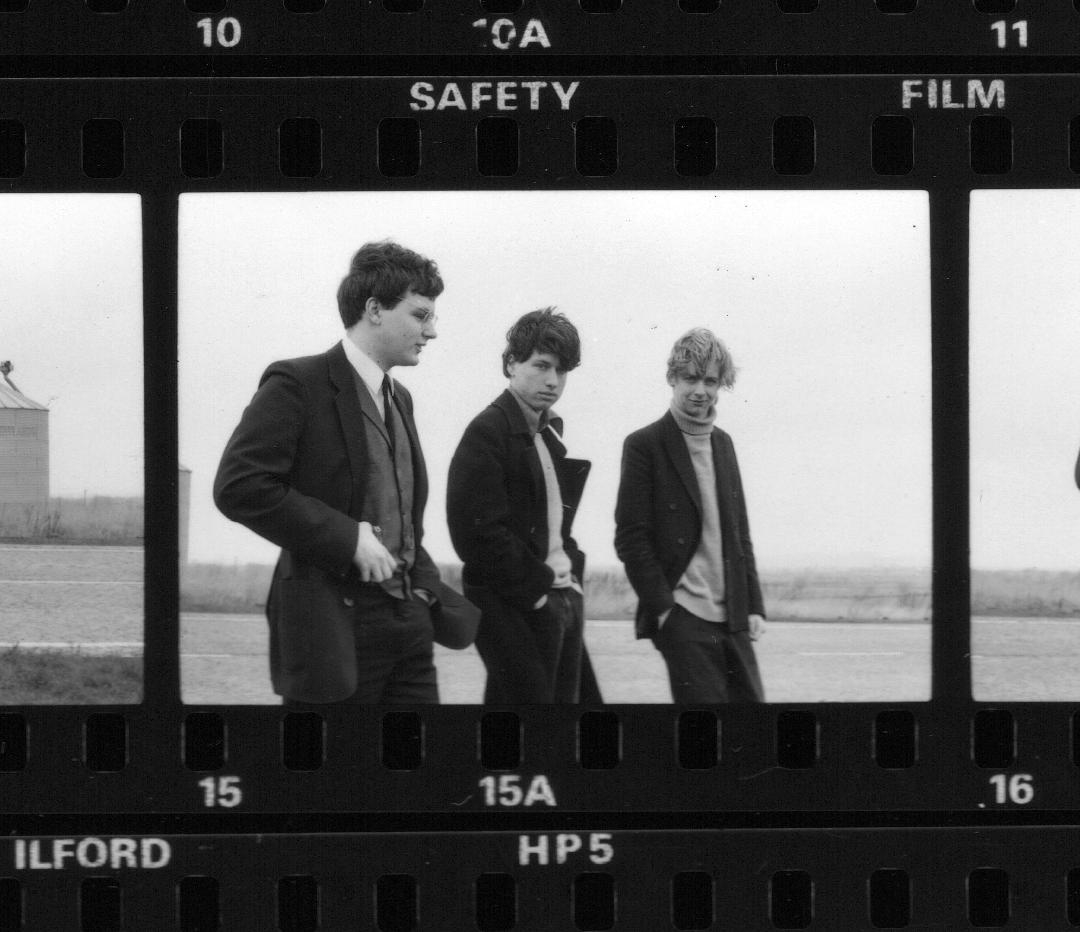
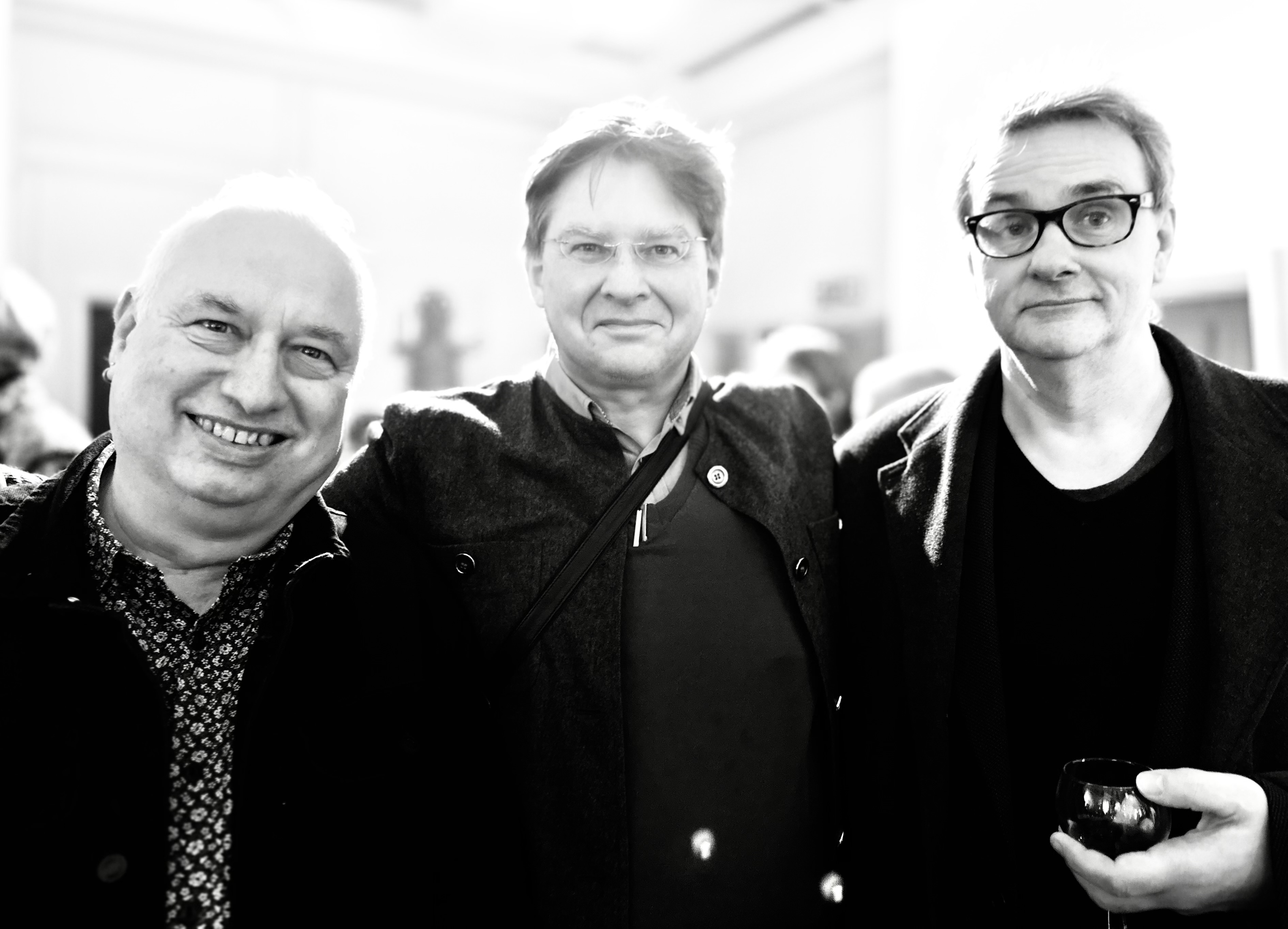
Images (top to bottom): 1. CA 1983 © Helen Craig; 2. CA 1983 © Helen Craig: 3. CA 2025 © Vit Hopley
Cultural Amnesia. Postpunk Electronic Ensemble, est. 1980
"What does one say? Cultural Amnesia have never ceased to amaze me with their finely honed songs of innocence and insecticide. Each gleaming tune a button on their hair shirt. There is a raw spirit of experiment, of mis-adventure with emotions, that is almost awkward to listen to. Time shifts and personal twists reveal a complex web of older children, playing with something they know full well is not really for the general public. Using a vocabulary of myths and symbols, along with splintered shards of themselves, caricatures and alter egos weave and parade in drunken 'night on the town' scenarios, in crazy-glass-house confrontations with each other. All life is here. Bitter and sweet. Love, sex behind supermarkets, truth and lies, jealousy and an all-pervading earthy magick. And Death..."
– John Balance, the Ides of March 1983
One of the UK's "very best tape-culture bands"
– Electronic Sound magazine, November 2025
"... Cultural Amnesia teeter on the brink of total psychosis. Nine Inch Nails are a lullaby in comparison. The band's three albums, all cassette-only releases, are very difficult to find nowadays, with originals selling on the Net for about 50 Euros … For a moment they are a cyber-Doors, then Joy Division adrift in one of the lower circles of hell, then an evil Tuxedomoon. Paranoia, noise and anxiety, dark-wave and electro-noise, distorted sounds as though emitted from pipes, screaming synthesisers and a rain of static floating through the entangled cables of the digital world-net... This band's message: there is no exit from the abyss."
– The Hidden History of Pop – Top Ten 'Unknowns'", Popbooks, Web Magazine of Popular Culture (Belgrade), March 2005
Well... CA's music may be more various than Popbooks's above very flattering notice evokes, and our means of production have dramatically changed over our 45-year history, but the personnel and the essential approach remain the same...
Cultural Amnesia, Post-Punk and the British Cassette Culture of the late 1970s/early 1980s
The focus of this site is the British post-punk/art-music ensemble Cultural Amnesia (Ben Norland, John Peacock, Gerard Greenway), who were first active between 1980 and 1983, during the post-punk years, in what has come to be known as the “cassette culture”, an amateur subculture of music production and circulation that used the Compact Audio Cassette, both largely for recording and as the medium of distribution. Cassette culture, or the “tape scene”, was an extremely extensive, international, development in alternative music making. Most cassette artists, including Cultural Amnesia, had no access to professional studios, but rather recorded largely in their homes, using newly affordable electronic instruments and recording machines. Some people swapped or sold directly their cassette releases, others (including Cultural Amnesia) worked with small companies. In the UK the scene began to decline with the coming of the middle 1980s.
Recording and production in the Cassette Culture: Out of poverty of means, creativity
When listening to the early-'80s music of Cultural Amnesia, it is important to bear in mind the conditions in which they worked, dramatically removed from those of the 21st century. Their earliest work stands as a testament to music making with the very meagrest of means (see: Abject Noise-Makers). They began with barely any equipment, a Woolworths guitar, a Bontempi organ, a “prepared” piano, recorders and melodicas. Gradually they acquired more, most crucially, towards the end of 1980, their Korg MS10 monophonic synthesiser. The paucity of their means is hard to conceive for those who have grown up in the age of the Desktop Audio Workstation: endless tracks, endless virtual instrumental resources, and total manipulability. CA began recording on reel-to-reel machines, and shoebox and portable stereo cassette players/recorders (the latter, so called “boomboxes”). Only in the summer of 1982 did they acquire a Fostex four-track recorder. Although the four-track was preceded by the technological curiosity of the Tensai, a two-track machine, much of their early work is one-track recordings, live performances often backed by a pre-recorded base track playing on a second machine. This attitude of “can Do” It Yourself with the slenderest of resources was very much of the spirit of the cassette culture, enabled by new technology and Punk’s rallying cry of “anybody can be in a band”, anybody can make music; you do not need a 72-track recording and mixing console and an articulated lorryful of instruments. Cultural Amnesia began as an extreme example of this spirit and of the ingenuity and originality it could engender. (Please see the short PDF article downloadable below.)
Part of the network, but far from the heart: Making our way
Based in a village in Buckinghamshire, very close to the market town of Thame, about 40 miles north-west of London and 14 miles east of Oxford, Cultural Amnesia (CA) were somewhat remote viewers of the post-punk cassette culture, and also rather young. Whilst in no way pastoralists, and often writing of a mythicised personal near-future of squalid lodgings and squalid affairs and the venality but also the lure of the lurid neon-lit "city", nor were they in any way attracted by the paranoid fantasies of "control" and "resistance" that fed, and continue to feed, the industrial and post-industrial scene and its progeny, from whose early exponents' pushing of musical boundaries CA nevertheless took significant inspiration (amidst a lot of other music-listening). Industrial and post-punk, and the phenomenon of the tape scene in all its variety, engendered a sense of freedom and openness in which the band would pursue its own course as, essentially, songwriters and storytellers. However, secreted in their bucolic retreat, they were very lucky to know somebody who would become a major personality of the post-industrial experimental scene, a young man called Geoff Rushton, who in 1982/3 would change his name to John Balance and form Coil with Peter Christopherson. Geoff acted as the manager and publicist for Cultural Amnesia, on whose behalf he was extremely energetic, and he also wrote a number of songs for the band. Geoff was a central figure in the tape scene due to his editorship of Stabmental fanzine and Cultural Amnesia had the benefit of his contacts, which were second to none.
Reformation, 1998: Onward not backward
CA resumed activities in 1998, and culturalamnesia.com was launched in 2003 with the aim of providing full coverage of the history of the band from its inception in 1980 and to document fully our activity and provide information on all those we have worked with or been involved with over the years. The site is our repository and place of collective Cultural Anamnesis. It also includes broader materials relating to the milieu of the cassette culture and aims to serve, to some extent, as a general resource. The site was conceived and executed by John Peacock of the band, and is authored by the three members.
Navigating Culturalamnesia.com
The Homepage link is our logotype and “AtomNoise” logo to the left of all pages; the Index link is to the right on all pages. There is some information about the index categories at the "About This Index" entry at the head of the index.
Social Media, Contact, Wikipedia
CA Instagram
CA Facebook
E-mail: Info@culturalamnesia.com
CA Wikipedia
Bandcamp
Almost all recently released music and all currently available collections are to be found at our Bandcamp page. Please do follow us there if you wish to be kept informed of CActivity.
Iron Banana
Iron Banana is Cultural Amnesia’s aspect as a production company, and also acts occasionally as our label, and all productions of the band (music collections, videos, publications) carry an IB catalogue number. IB1 was out first cassette album, Video Rideo (released in June 1981 on Con/ventional Tapes).
Electronic Sound, "Time Machine" Feature, No. 135, March 2026
Attached below is a two-page PDF of an article from Electronic Sound magazine about Cultural Amnesia. It concentrates on our first album, Video Rideo.
culturalamnesia.com. IB4B
Download Page created 22/09/2026